
Events By Quarter
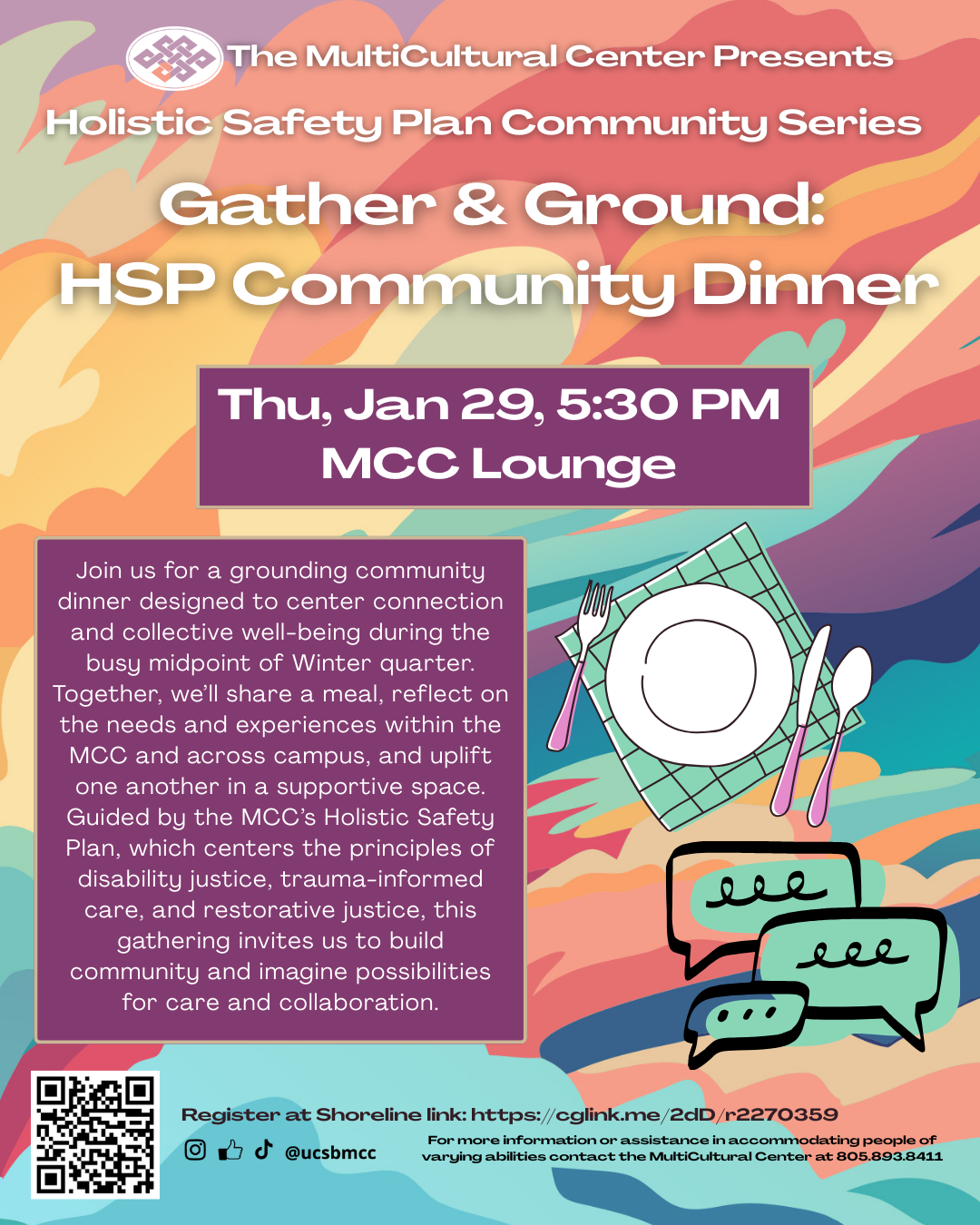
Gather & Ground: HSP Community Dinner
Hosted by MCC team members
MCC Lounge
Join us for a grounding community dinner designed to center connection and collective well-being during the busy midpoint of Winter quarter. Together, we’ll share a meal, reflect on the needs and experiences within the MCC and across campus, and uplift one another in a supportive space. Guided by the MCC’s Holistic Safety Plan, which centers the principles of disability justice, trauma-informed care, and restorative justice, this gathering invites us to build community and imagine possibilities for care and collaboration.
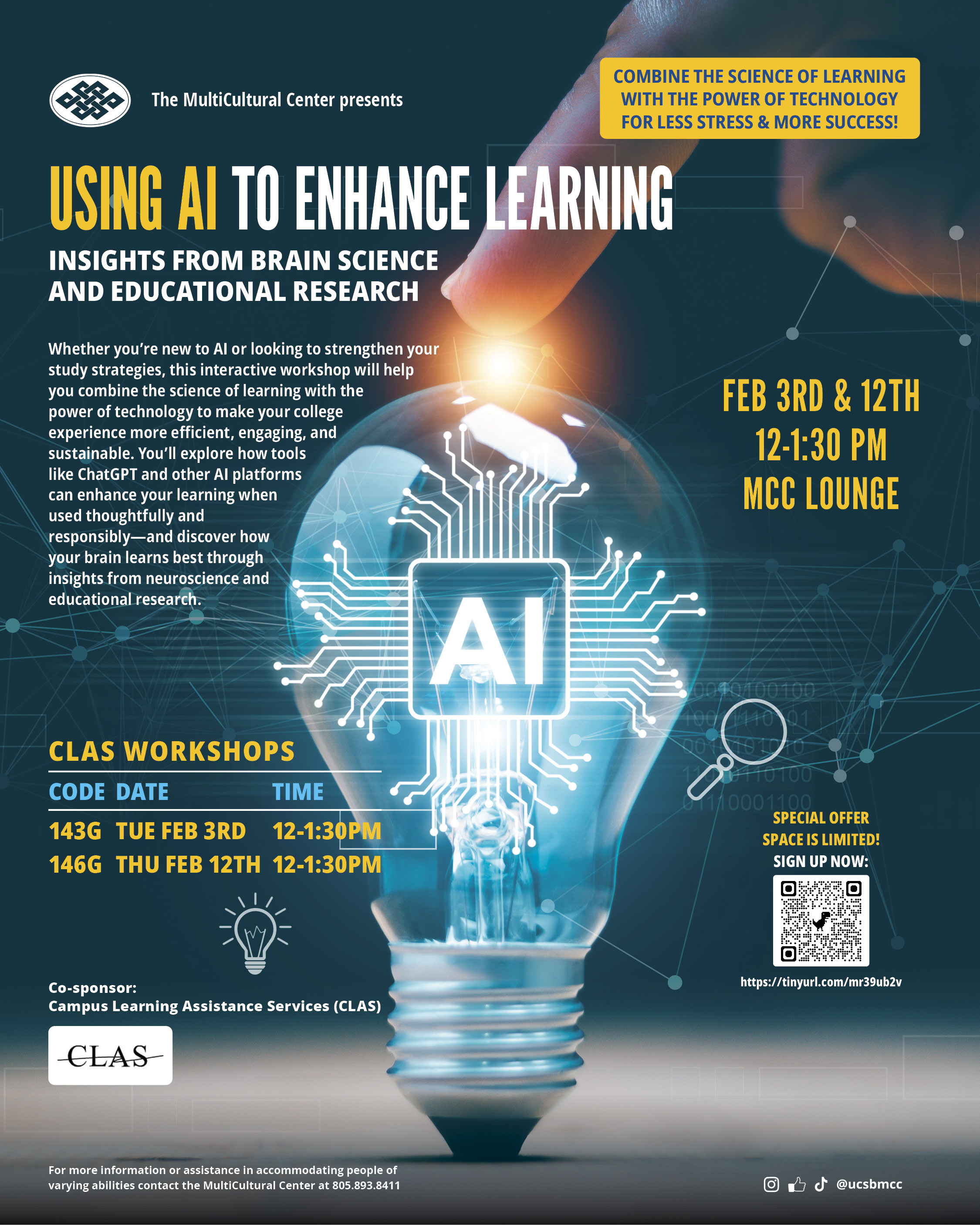
Using AI to Enhance Learning
MCC Lounge
Insights from brain science and educational research
Combine the science of learning with the power of technology for less stress & more success!
CLAS Workshops:
- Code 143G, TUE FEB 3RD, 12-1:30PM
- Code 146G, THU FEB 12TH, 12-1:30PM
Whether you’re new to AI or looking to strengthen your study strategies, this interactive workshop will help you combine the science of learning with the power of technology to make your college experience more efficient, engaging, and sustainable. You’ll explore how tools like ChatGPT and other AI platforms can enhance your learning when used thoughtfully and responsibly—and discover how your brain learns best through insights from neuroscience and
educational research.
SPECIAL OFFER: SPACE IS LIMITED!; SIGN UP NOW
Co-sponsor: Campus Learning Assistance Services (CLAS)
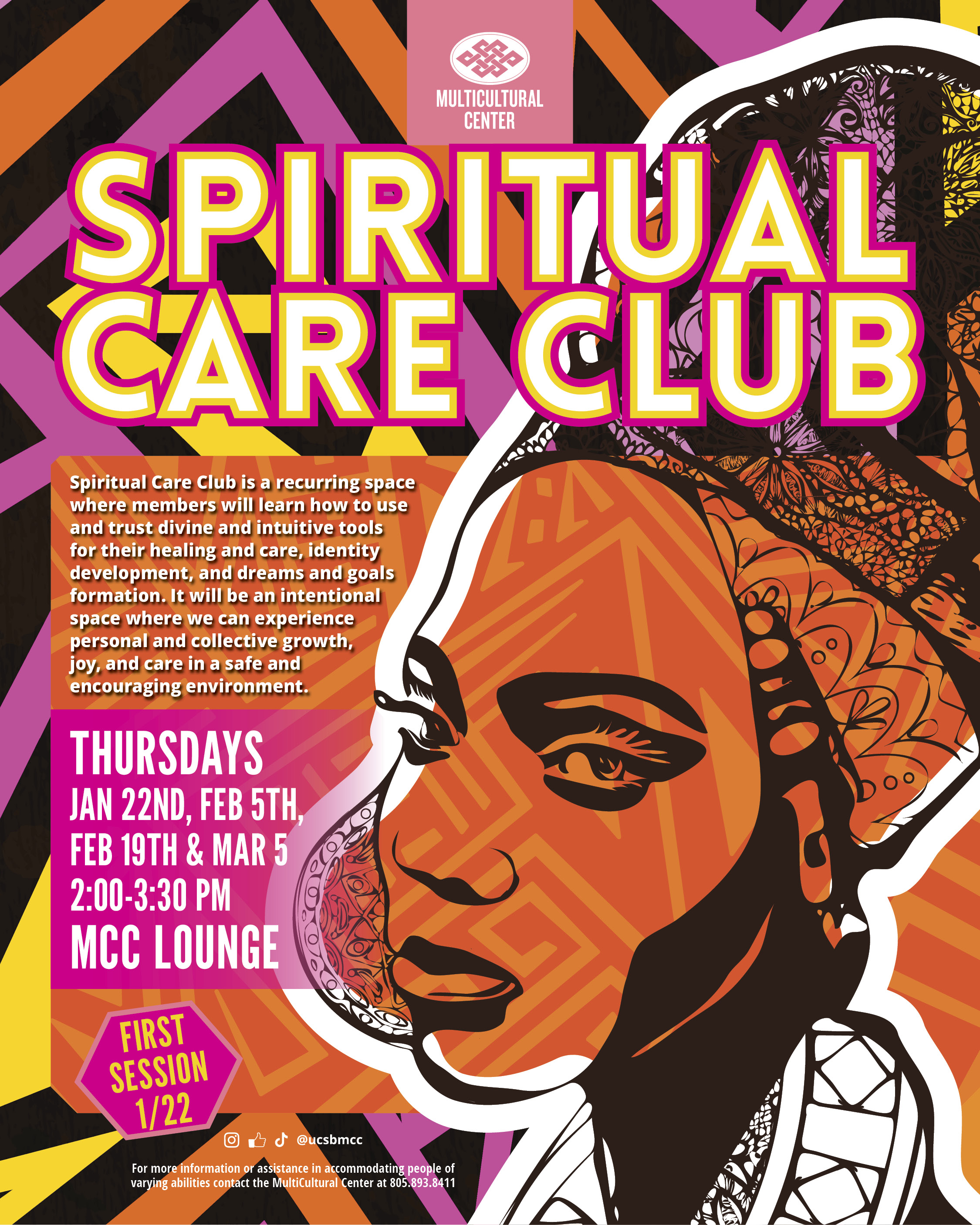
Spiritual Care Club
MCC Lounge
Spiritual Care Club is a recurring space where members will learn how to use and trust divine and intuitive tools for their healing and care, identity development, and dreams and goals formation. It will be an intentional space where we can experience personal and collective growth, joy, and care in a safe and
encouraging environment.
Thursdays Feb 5th, Feb 19th & Mar 5 2:00-3:30 pm MCC Lounge
Race Matters Series
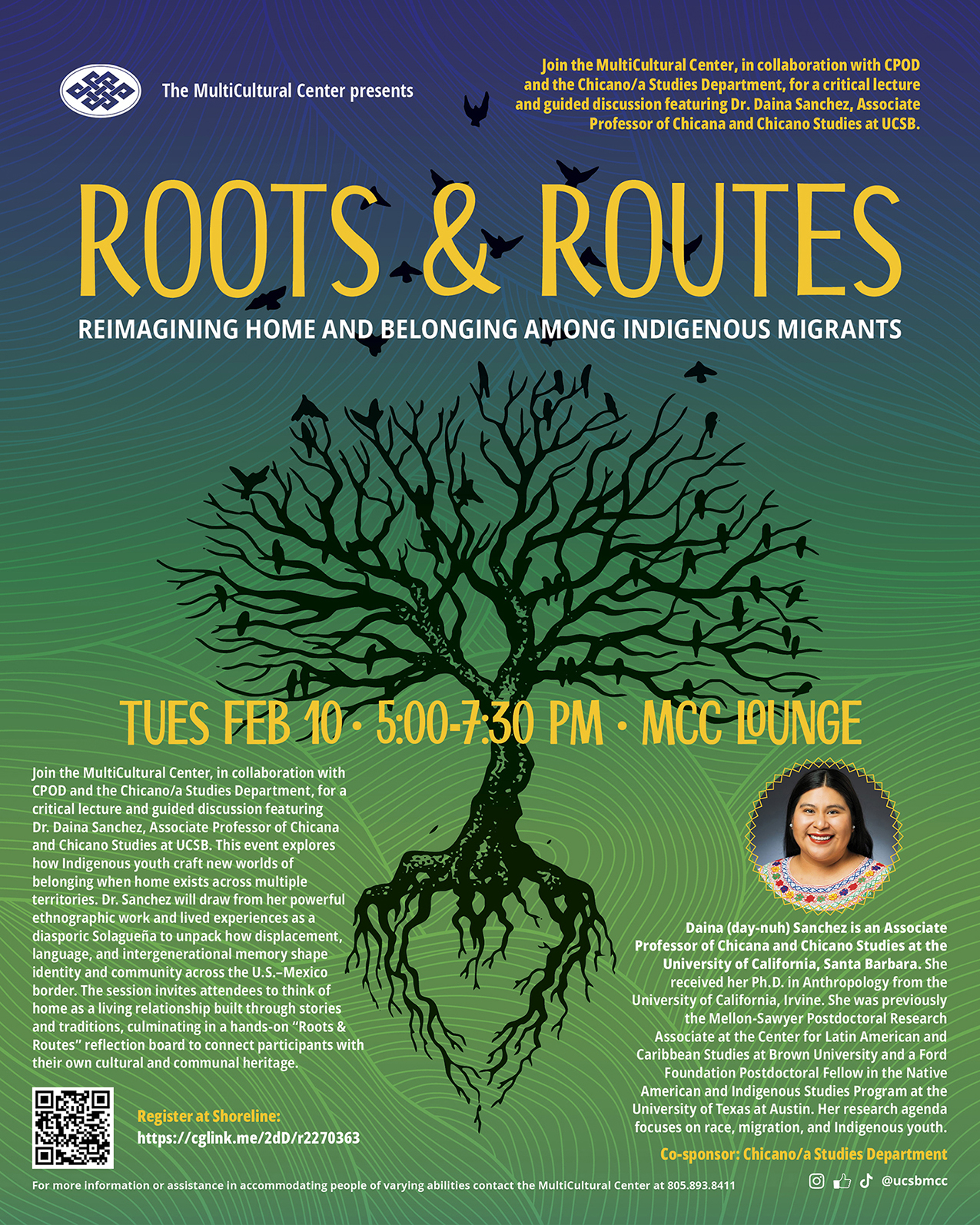
Roots and Routes: Reimagining Home and Belonging Among Indigenous Migrants
Dr. Daina Sanchez
MCC Lounge
Join the MultiCultural Center, in collaboration with CPOD and the Chicano/a Studies Department, for a critical lecture and guided discussion featuring Dr. Daina Sanchez, Associate Professor of Chicana and Chicano Studies at UCSB. This event explores how Indigenous youth craft new worlds of belonging when home exists across multiple territories. Dr. Sanchez will draw from her powerful ethnographic work and lived experiences as a diasporic Solagueña to unpack how displacement, language, and intergenerational memory shape identity and community across the U.S.–Mexico border. The session invites attendees to think of home as a living relationship built through stories and traditions, culminating in a hands-on “Roots & Routes” reflection board to connect participants with their own cultural and communal heritage.
Daina (day-nuh) Sanchez is an Associate Professor of Chicana and Chicano Studies at the University of California, Santa Barbara. She received her Ph.D. in Anthropology from the University of California, Irvine. She was previously the Mellon-Sawyer Postdoctoral Research Associate at the Center for Latin American and Caribbean Studies at Brown University and a Ford Foundation Postdoctoral Fellow in the Native American and Indigenous Studies Program at the University of Texas at Austin. Her research agenda focuses on race, migration, and Indigenous youth.
Her first book, The Children of Solaga: Indigenous Belonging across the U.S.-Mexico Border (Stanford University Press), examines how Indigenous Oaxacan youth form racial, ethnic, community, and national identities away from their ancestral homeland. Drawing on long-term ethnographic fieldwork between Los Angeles, California and San Andrés Solaga, a Zapotec town in the Mexican state of Oaxaca, The Children of Solaga centers Indigenous ways of knowing and being in the world, and adds a much-needed transnational dimension to the study of Indigenous immigrant adaptation and assimilation. Sanchez, herself a diasporic Solagueña, argues that the lived experiences of Indigenous immigrants offer a unique vantage point from which to see how migration across settler-borders transforms processes of self-making among displaced Indigenous people. Rather than accept attempts by both Mexico and the U.S. to erase their Indigenous identity or give in to anti-Indigenous and anti-immigrant prejudice, Oaxacan immigrants and their children defiantly celebrate their Indigenous identities through practices of el goce comunal ("communal joy") in their new homes.
Co-Sponsors: CPOD, Chicana/o Department, USS Office
